
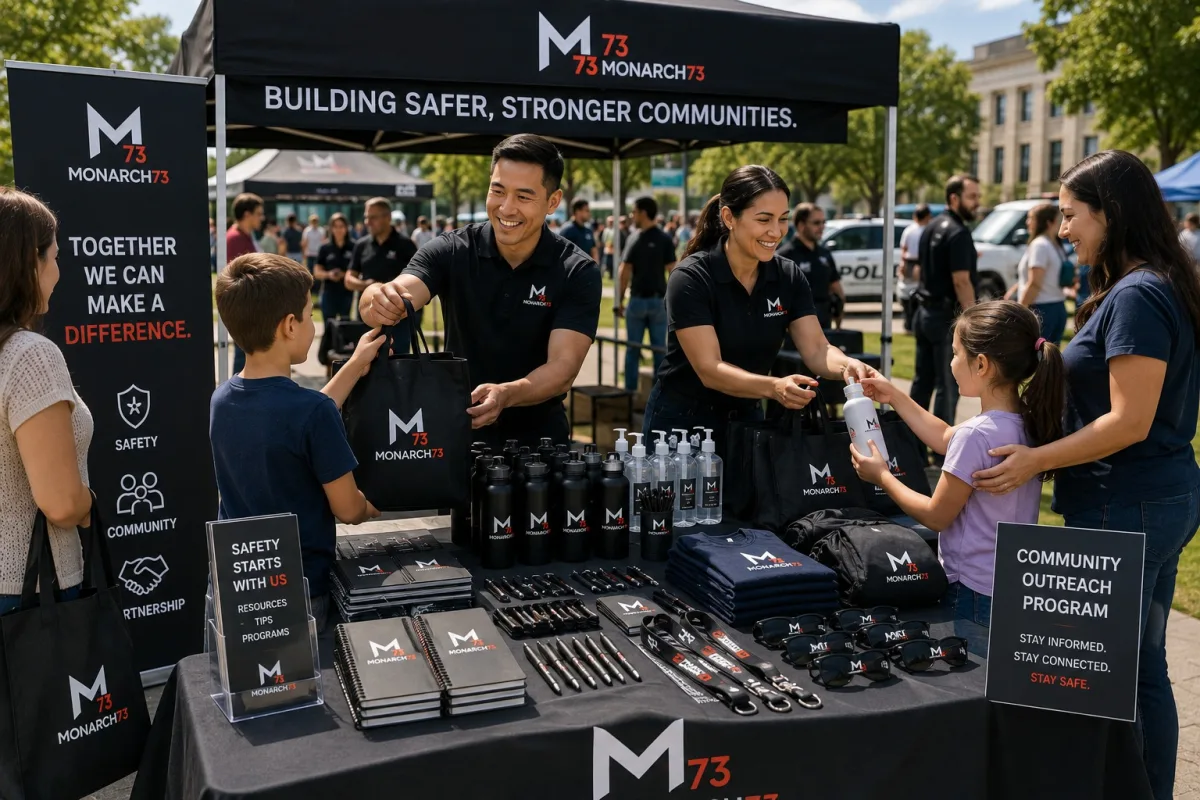
Community outreach has a measurable failure mode: the item is accepted politely at the table and abandoned in the car park. It cost money, it carried the agency mark, and it produced nothing.
The test for outreach merchandise is not whether somebody takes it. Everything free gets taken. It is whether it survives the walk home.
Useful beats clever
The items that reliably last are the ones that solve a small ordinary problem: a water bottle, a reusable tote, a first-aid kit, a phone charger, a reflective drawstring bag. They get used because they are useful, and the mark travels with the use.
Anything that needs explaining, anything printed with a date, and anything that duplicates something the household already has in a drawer is a cost with no tail.
Plan the quantity from attendance, then plan for being wrong
Outreach attendance is genuinely hard to forecast, which is why so many programs either run out in the first hour or store the surplus for a year. Neither is a planning failure exactly — but the surplus is only a waste if it cannot be used again.
Order items that are not date-stamped to a single event and the overage becomes next season's stock rather than a write-off. That single decision does more for outreach budgets than any negotiation on unit price.
Tier the giveaway
Not everyone at the table needs the same thing. A high-volume, low-cost item for general attendance, something more substantial for people who engage properly, and a small number of genuinely good items for partners and community leaders puts the spend where it changes something.
Flattening it — one mid-priced item for everyone — is simultaneously too expensive at volume and too unremarkable to matter.
Run the season, not the event
Most agencies run several outreach events a year. Producing separately for each is the expensive way: several setups, several short runs, several prices. Produced once at season volume and held, each event draws what it needs, and replenishment is planned against the calendar.
We supply community outreach and public-safety merchandise, and warehousing covers holding a season's stock and releasing it event by event.