
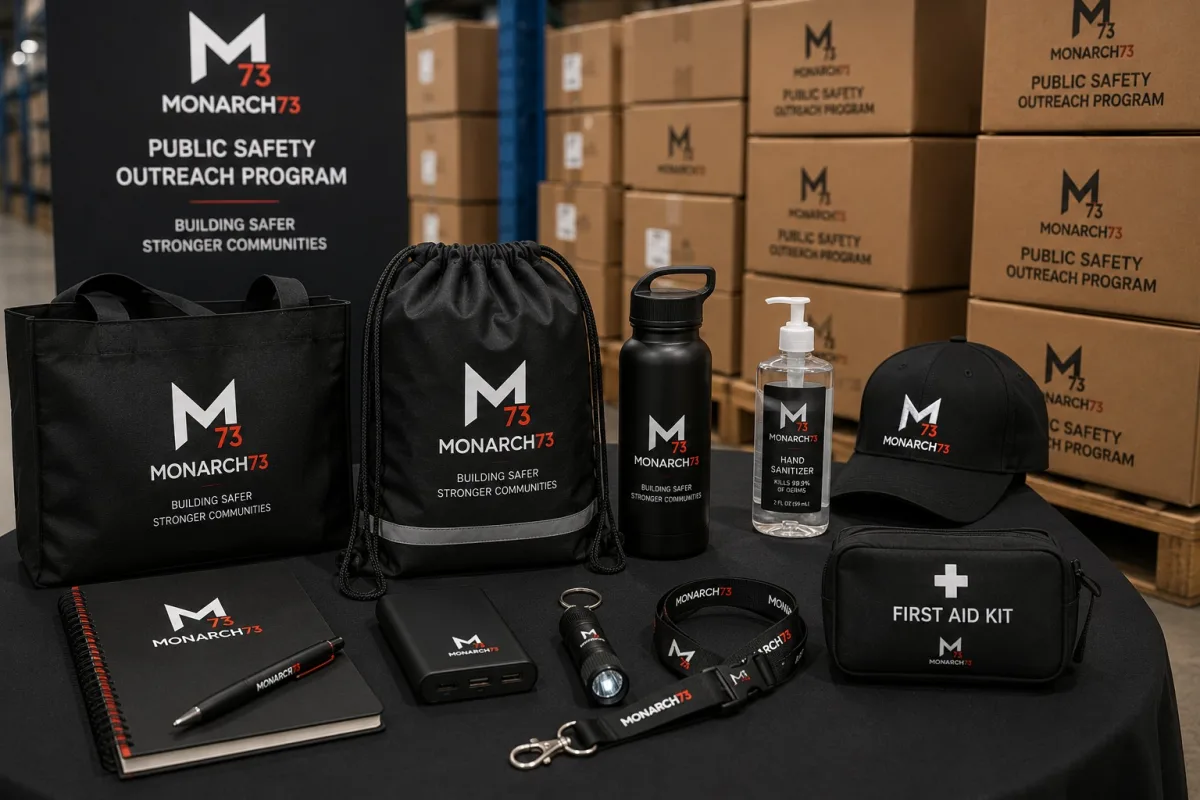
Merchandise sits awkwardly in procurement. It is not a commodity, because two suppliers quoting the same item may be quoting different materials. It is not a service, because there is a physical deliverable. And the specification is often written by someone who will never see the production floor.
These are the things worth pinning down before award.
Specify the material, not only the product
“Tote bag” covers a range from a 3oz non-woven giveaway to a 12oz cotton canvas bag that lasts years. Both are honestly quoted; only one matches what most people picture. Weight, material and construction are the difference between comparable bids and a race to the bottom.
Name the decoration method
Screen print, embroidery, pad print, laser engraving, full color and deboss produce different results, cost different amounts and suit different materials. Leaving the method open means bids are not comparable, and the cheapest will have chosen the cheapest method.
Require pre-production approval in writing
The single most useful clause: nothing enters production until the decorated proof is approved. It costs nothing, it moves the risk to the correct point in the process, and it gives you a defined standard for the run to be inspected against.
Ask what documentation comes with delivery
Packing records, carton counts, delivery confirmation and inspection records are either part of how the supplier works or assembled on request afterwards. Ask which. The answer tells you a lot about how the rest of the order will go.
State the delivery requirements as requirements
Number of destinations, per-location quantities, palletisation, receiving hours, appointment requirements, liftgate. These are cheap to plan into a shipment and expensive to solve on a loading dock.
Ask what happens if the date slips
Every supply chain has failures. What separates suppliers is whether you find out early enough to act. A supplier who has never mentioned a risk is not one without risks.
Be careful with credential claims
Registrations, certifications and set-aside statuses are checkable, and worth checking. So is the claim that a supplier can hold a color across 45,000 pieces. Ask for the program where they did it.
We produce to written specification for public-sector organizations. Our largest documented program is 45,000 pieces across nine product categories for the NYPD.