
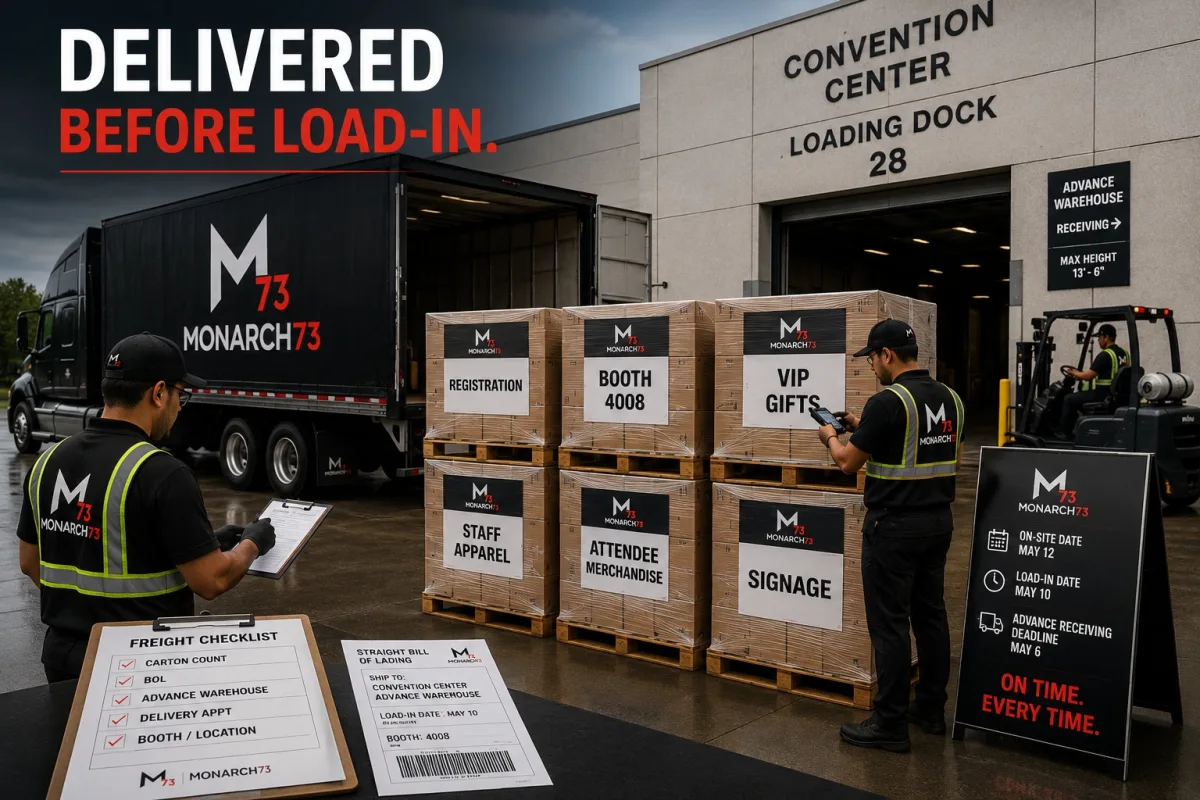
Most trade show merchandise problems are scheduling problems wearing a merchandise costume. The products were fine; they were ordered against the wrong date.
Fix the real deadline first
The date that constrains the order is not the first day of the show. It is the advance warehouse receiving cutoff, which typically closes well before load-in. Material delivered there waits in your booth space; material that misses it competes for the dock on move-in day.
Get that date from the show's exhibitor kit before ordering anything.
Then work backwards
From that cutoff, subtract freight, inspection, production and artwork approval. What is left is the window the order actually has. If it does not support what you have specified, better to know now than at proofing.
Decide the tiers
A general giveaway at attendee volume, something better for real conversations at the booth, and a genuinely good gift for speakers and sponsors. One flat item for everyone is both too expensive at volume and too forgettable for the people worth remembering.
Sort staff apparel by role and size before anyone travels
Booth staff, demo engineers and speakers often need different pieces, and sorting a mixed pallet at 6am on move-in day is nobody's plan. Pack and label by role and size so each group collects its own.
Ship signage with the merchandise
Banners, table covers and directional signage produced separately arrive separately, on their own schedules, with their own paperwork. One shipment and one delivery confirmation is materially easier to manage on site.
Plan what comes back
Anything not date-stamped to this show — apparel, drinkware, bags, banners — is next show's stock if somebody plans for it, and a write-off if nobody does.
If you exhibit repeatedly, buy the season
Five shows means five setups and five short runs unless you produce once at season volume and draw from held stock.
We handle event merchandise and ship-to-show logistics, and the in-hands date covers planning backwards in more detail.