
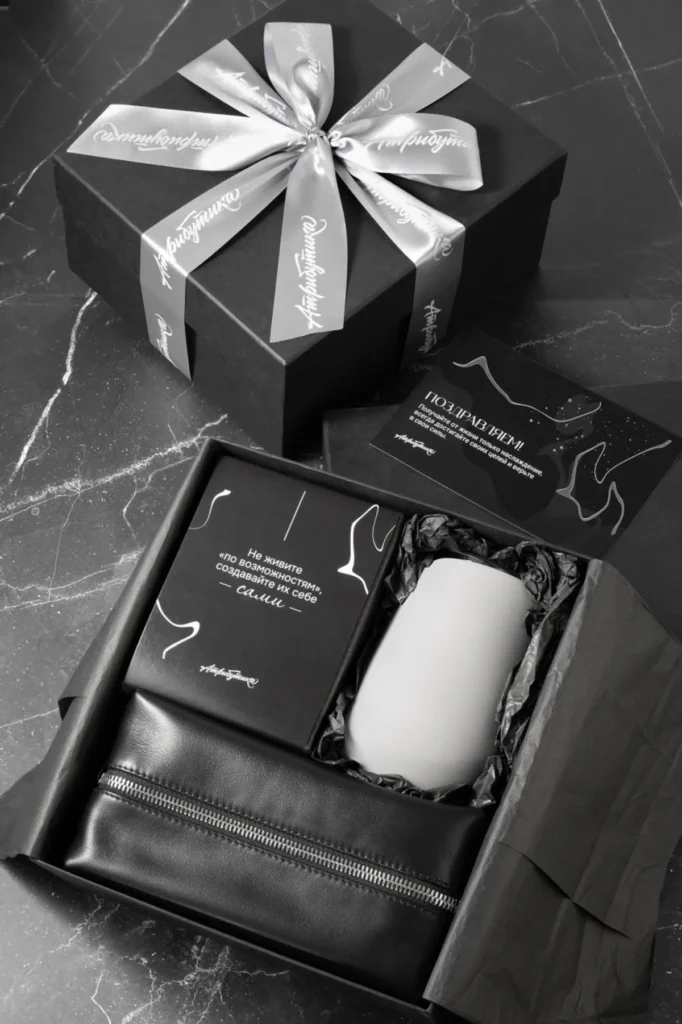
Most of what a company communicates is digital and disposable — an email, a post, an ad someone scrolls past. A gift is different. It is physical, it lasts, and it sits in someone's home or on their desk making a quiet statement about your organization every day.
That statement is made whether or not you intend it. A well-chosen gift says you pay attention to detail. A cheap one, branded loudly, says you wanted the logo impression more than you wanted to give someone something good. Recipients read this instantly and accurately.
1. Choose the object before you choose the branding
The most common mistake in branded merchandise is starting from the logo. The recipient starts from the object: is this something I want? Only after answering that do they notice whose logo is on it.
Work in that order. Decide what would genuinely be useful or pleasing to this specific audience, then find the most restrained way to mark it. On premium items that usually means an engraving, a deboss or a woven label rather than a print across the face.
2. Spend on materials, not on quantity
Perceived value in physical goods comes overwhelmingly from material. Leather, glass, steel, ceramic and real wood read as considered. Thin plastic reads as a giveaway regardless of what is printed on it.
Given a fixed budget, fewer better items almost always outperform more cheap ones. Twenty people receiving something genuinely good will remember it; two hundred receiving something forgettable will not, and the second option often costs more in total.
3. Treat the packaging as part of the gift
The unboxing is the moment the gift actually happens, and it is the cheapest part of the experience to improve. A good item in a plain shipping carton loses most of its effect; the same item in fitted packaging with a printed insert and a real note feels like an occasion.
This is most of what separates a gift from a delivery, and it is why we prototype a box before producing at volume. It is very hard to judge on a screen.
4. Make it specific to the recipient
Personalization does not have to mean a name engraved on everything. It can mean choosing different items for different segments, writing a note that references the actual relationship, or timing the gift to something meaningful to them rather than to your calendar.
An anniversary gift that arrives on the anniversary is worth more than a larger gift that arrives in a December batch alongside everyone else's.
5. Be consistent across everything you send
This is where multi-location and multi-team organizations quietly undermine themselves. When each office or department orders separately, brand colors drift, quality varies, and the same company shows up in four different versions of itself.
One approved catalog and one sourcing standard fixes it, and usually costs less than the fragmented version because the volume consolidates. For organizations where several teams order, a private store keeps that control without routing every request through one person.
6. Give the item a reason to stay in use
The longest-running brand impression is the one someone chooses to keep using. Bags, drinkware, outerwear and desk items earn years of impressions; novelty items earn days.
Before ordering, ask honestly whether you would use this yourself if it carried someone else's logo. It is an uncomfortable question and a reliable one.
7. Plan far enough ahead to have options
Nothing degrades a gifting program faster than a compressed timeline. Booked early, your budget buys what you actually want; booked late, it buys whatever can be rushed, at a premium. The constraint is almost always the date rather than the money — which is why the in-hands date is the first thing worth fixing.
None of this is complicated. It is mostly a matter of deciding that the gift is a real expression of the brand and treating it accordingly. If you would like help scoping one, tell us the audience and the occasion.