
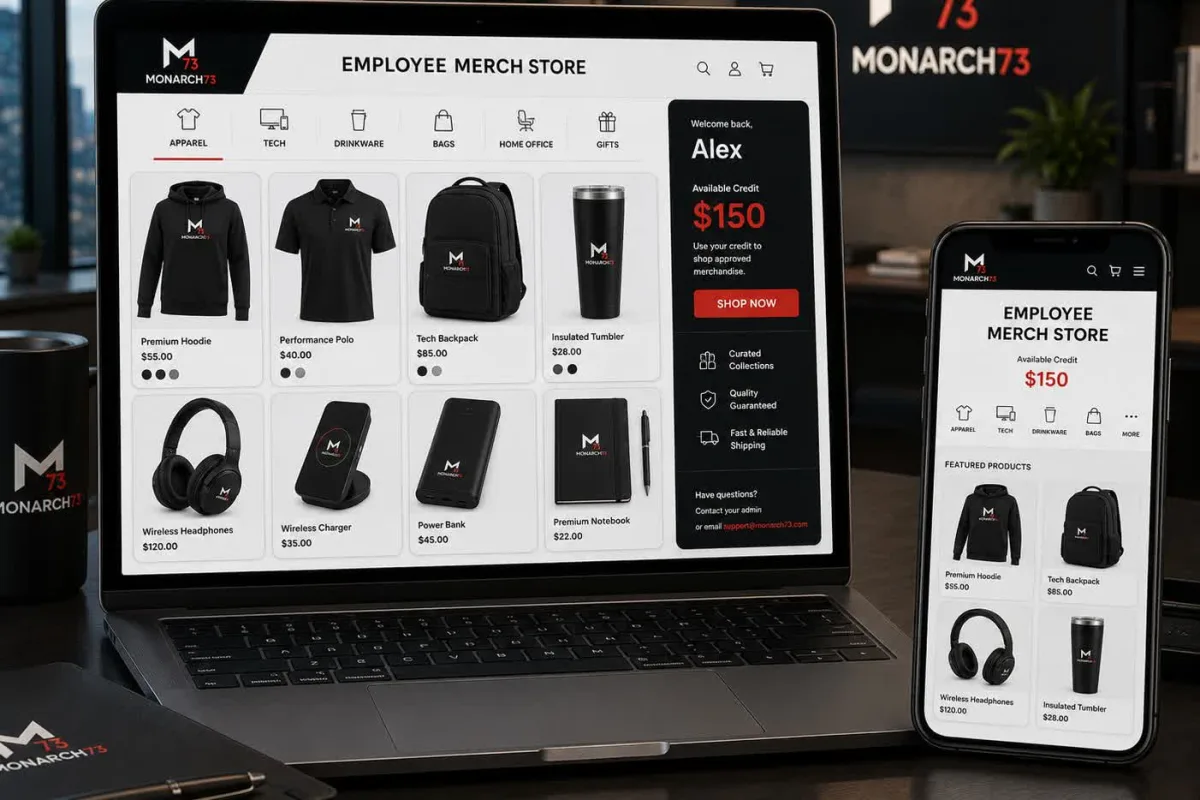
A company store is usually pitched as a website. It is not — it is an inventory program with an ordering interface attached, and the projects that fail are the ones that build the interface first.
Decide the catalog before anything else
What is available, in what colors, at what sizes. A store with six items in stock beats one with forty items where most are unavailable, because the second teaches people not to bother returning.
Produce the core range and hold it
Stock is what makes a store work. Orders drawn from held inventory ship this week; orders that trigger a production run mean everybody waits. Produce at volume once, hold it, and release it order by order.
This is also how the store stays affordable — you get the volume price without taking delivery of everything at once.
Separate who can sign in from what they can see
Access and catalog are different questions. Employees, a specific department, a location or a partner can each be shown the range that applies to them, and budgets or credits can be set per group without changing who has a login.
Decide how it is paid for
Company-funded credits, department budgets, employee-paid, or a mix. This is the decision most likely to be deferred and most likely to cause friction later, because it determines what the store is for.
Plan replenishment from the start
A store that runs out is worse than no store. Inventory visibility and a reorder point are what turn it from a stock pile into something people trust.
Launch small
A tight range that is always in stock builds the habit. Breadth can come later; availability cannot be retrofitted onto a bad first impression.
Branded eStores covers the store and the fulfillment behind it, and warehousing covers the inventory.