
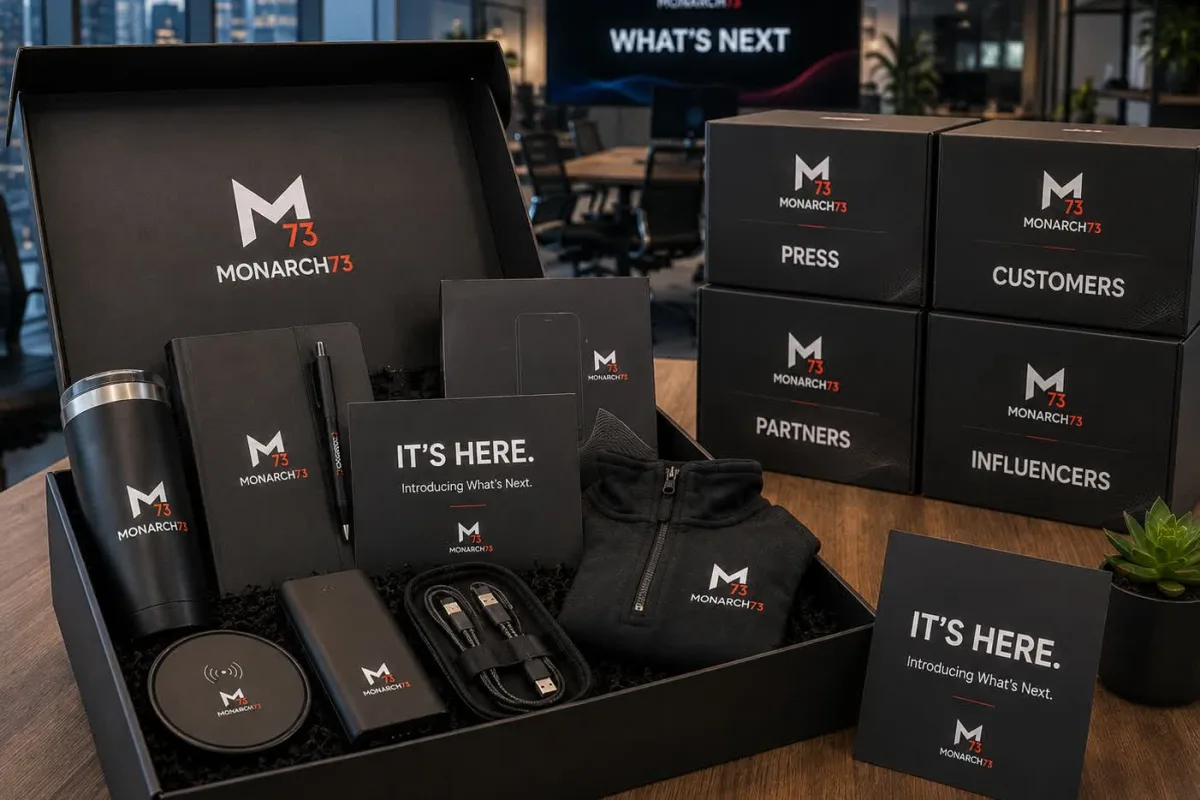
Launch kits fail in a specific way. They arrive after the announcement, or they arrive at different times, or half of them arrive damaged. The contents are rarely the problem.
Everything about planning one should be organized around landing together on a date that was announced before the merchandise was ordered.
Build versions, not one kit
Press, customers, partners and influencers want different things and justify different budgets. A single kit that serves all four is over-specified for most of the list and under-specified for the people who matter.
Design the tiers, then build the shared components once and vary what sits on top.
The packaging is the product for the first ten seconds
A launch kit is opened on camera more often than any other kind of merchandise. The unboxing is the impression, which means the insert, the tissue, the card and the way things sit in the tray are doing real work — more than any individual item inside.
Hold the kits, then release them
Assembling to the embargo date is the mistake. Assemble early, hold the finished kits, and release them so they land together. That converts a production risk into a logistics decision, which is much easier to manage.
Get the recipient list early and expect it to change
Press lists move until the last minute. Build the program so late additions are a fulfillment task rather than a production one — which means having spare assembled kits, not spare components.
Write down what happens to the overage
Launches over-order deliberately, and the surplus is either a small reserve for follow-up conversations or a box in a cupboard. Deciding which before the launch is the difference.
We build and fulfill custom kits and packaging, and kitting and fulfillment covers assembling to a specification and shipping to individual recipients.